
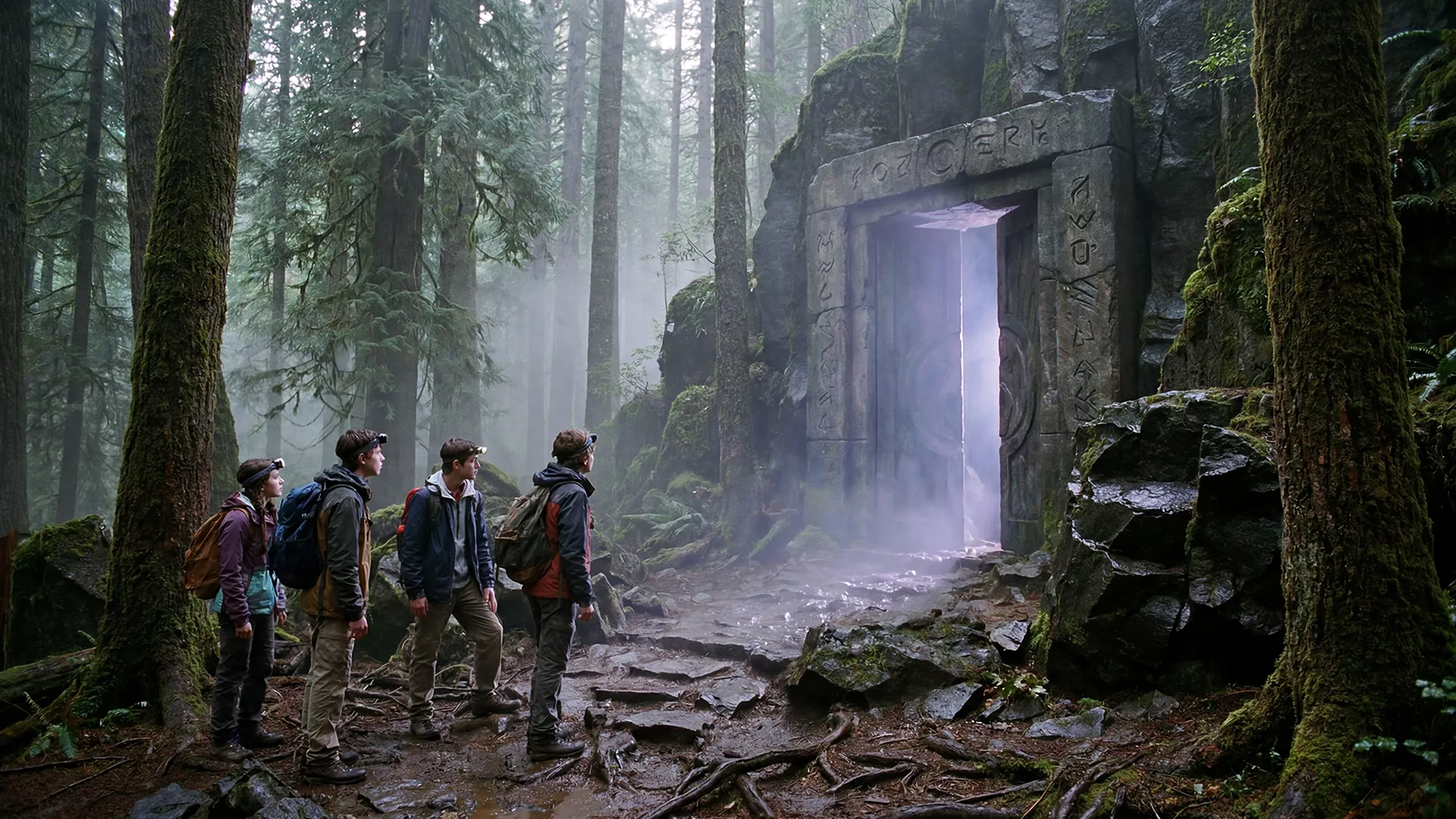
Some stories begin in the past. Some begin in the future. The Basalt Door does something more interesting. It begins with an ancient mystery, then slowly brings that mystery into the modern world.
At first, the danger feels old. There is a strange slab, a hidden portal, giant beings, lost knowledge, and a world that feels far older than anything the four friends understand. But later, the threat changes. It does not stay trapped in stone, mist, or forgotten places. It finds a new way to survive.
It enters technology.
That is what makes The Basalt Door feel different. The book is not only about ancient danger. It is also about what happens when that ancient danger learns how to move through the digital world. The story turns into a modern sci-fi threat where sound, static, wires, signals, and screens become part of the danger.
This is where the idea of digital evil becomes important.
A New Kind of Digital Evil
In many stories, evil has a body. It has a face. It walks, speaks, attacks, and stands in front of the hero. But in The Basalt Door, the threat becomes harder to see. It does not always need a body. It can hide inside sound, light, static, and machines.
That makes the danger feel more unsettling.
A monster in front of you is frightening, but at least you can see it. A threat inside a signal is different. It can be close without anyone knowing. It can move through a room without opening a door. It can enter a computer, a screen, or a system before the characters fully understand what is happening.
This kind of digital evil feels modern because people already live around technology every day. Phones, computers, wires, cameras, power systems, and the internet are part of normal life. So when the book brings ancient evil into that space, the danger feels closer.
It is no longer only a threat from another world. It becomes a threat that can reach the world the characters call home.
Ancient Tech in a Modern World
One of the strongest ideas in the book is the mix of ancient tech and modern systems. The danger does not feel like normal technology. It feels older, stranger, and more powerful than anything humans fully understand.
The Builder-Kings and Xylos are connected to knowledge that feels ancient but advanced. Their tools, portals, sonic systems, and strange machines are not simple magic. They feel like a form of science that humans have not caught up to yet.
That is what makes ancient tech such a strong keyword for this story.
The technology in The Basalt Door does not come from a modern lab. It comes from an older mystery. It feels like something left behind by beings who understood sound, space, time, and energy in ways ordinary people never could.
When that ancient power touches modern machines, the story becomes more dangerous. The old world and the new world begin to connect. A forgotten threat starts using modern tools. The past is no longer buried. It is active again.
The Rise of a Modern Sci-Fi Threat
The second half of the story moves into a stronger modern sci-fi direction. The book still carries mystery and adventure, but the danger becomes more connected to technology.
This shift gives the story a wider feeling. It is not only about surviving another world. It is also about stopping something from entering this world.
That makes the stakes bigger.
The characters are not just trying to escape anymore. They are trying to understand what has followed them back. They are dealing with something ancient that can use modern systems against them. This gives the book a strong tech thriller feeling.
A good tech thriller needs tension. It needs a threat that moves fast. It needs characters who must think quickly, make hard choices, and stop something before it spreads too far. The Basalt Door uses these elements well because the danger is not only physical. It is also digital, hidden, and hard to control.
The Sonic Ghost
One of the most interesting parts of the story is the idea of the sonic ghost.
This phrase fits the book because sound plays such a major role. Frequencies, vibrations, hums, static, and signals are all connected to the danger. The threat is not always seen first. Sometimes it is heard. Sometimes it is felt. Sometimes it moves through noise before anyone can name it.
A sonic ghost is a strong idea because it feels both spiritual and scientific. It suggests a presence that is there, but not fully visible. It can haunt a space through sound. It can appear through static. It can disturb machines, rooms, and minds.
This gives the book a different kind of fear. It is not loud horror. It is quiet, strange, and creeping. The characters may not always know where the threat is coming from, but they can feel that something is wrong.
That makes the danger more personal. It enters the senses. It gets into the air. It turns normal sounds into warning signs.
The Dark Signal
Another strong keyword for this blog is dark signal.
A signal is usually something that carries information. It can send a message, connect people, or control a system. But in The Basalt Door, a signal can also become dangerous.
A dark signal suggests that something harmful is moving through technology. It is not just a message. It is a force. It can carry the presence of something ancient. It can turn a normal system into a doorway.
This idea works very well with the book’s larger theme. The first portal is physical. It begins with the slab. But later, the danger does not need the same kind of door. It starts finding new paths.
That is what makes the dark signal so effective. It shows that the threat has changed. It has adapted. It is no longer trapped in one place. It can travel through systems that were never meant to hold it.
For readers, this creates a strong sense of fear. If the threat can hide in a signal, then nowhere feels completely safe.
A Hidden Threat Inside the Power Grid
The idea of a hidden threat is important throughout the book. In the beginning, the threat is hidden behind the slab and the portal. Later, it is hidden inside the modern world.
The power grid is a strong symbol for this. It connects cities, buildings, homes, and machines. Most people do not think about it until something goes wrong. It works quietly in the background.
That is why it makes such a good place for danger.
A hidden threat inside the power grid feels serious because it could affect everything. Lights, servers, homes, signals, and systems all depend on power. If something ancient and intelligent finds a way into that network, the danger becomes much larger than one room or one group of friends.
This gives the story a bigger scale. The fight is no longer only about survival. It becomes about stopping a threat before it reaches too far.
Why This Works as a Tech Thriller
The Basalt Door works as a tech thriller because the danger keeps changing shape. At first, the friends face the unknown through the portal. Then they face giant beings, strange creatures, and an ancient world. Later, the fight moves into technology, sound, systems, and signals.
This keeps the story moving.
The characters cannot rely on only one kind of strength. They need courage, loyalty, knowledge, quick thinking, and trust. Haley’s mind becomes important because she understands patterns and frequencies. James carries the weight of curiosity and guilt. Britney keeps the group steady. Jerry gives the team courage and protection.
Together, they face a threat that is bigger than any one of them.
That is what makes the modern sci-fi side of the book work. The technology is not just there for style. It becomes part of the conflict. It becomes part of the fear. It becomes part of the final fight.
Ancient Danger in a Digital World
The strongest part of this topic is the clash between ancient danger and modern life.
Ancient danger usually feels far away. It belongs to old stories, lost worlds, myths, ruins, and forgotten warnings. But The Basalt Door brings that danger forward. It shows that the past is not always finished. Sometimes it waits. Sometimes it learns. Sometimes it finds a new way back.
That is what makes the book feel fresh.
The story does not leave ancient evil in the ancient world. It asks a more frightening question: what if something old entered the systems we depend on today?
That question gives the book its modern edge. It makes the mystery feel current. It turns the story into more than a portal adventure. It becomes a warning about knowledge, power, and what can happen when hidden forces find new tools.
Conclusion
The Basalt Door is not only a story about a portal. It is also a story about what follows after the portal opens.
The book begins with mystery, friendship, and survival, but it grows into something larger. Ancient power enters the modern world. Strange knowledge touches technology. A sonic ghost moves through sound and static. A dark signal becomes a path for danger. A hidden threat begins to spread through wires, systems, and the power grid.
That is why the book works so well as modern sci-fi and a tech thriller. It takes the fear of ancient evil and places it inside the digital world we know today.
The result is a story where the past and present collide. The danger is old, but its new form is modern. It is no longer only behind the basalt door. It may be inside the signal, inside the wire, and waiting in the static.